
Did you know making a new car can release a lot of greenhouse gases? It’s like driving a new car for years. This shows how good it is to choose a used car instead.
At our company, we know how important it is to be eco-friendly. Buying a used car saves money and helps the planet. It cuts down on waste and the carbon emissions from making new cars. We make selling your car easy and quick, with clear and simple service.
Key Takeaways
- Buying a used car reduces the demand for new, resource-intensive vehicles.
- Choosing a used car can significantly lower your carbon footprint.
- Our service offers immediate cash for your used car, making the process efficient and straightforward.
- Eco-friendly used cars are a viable alternative to new vehicles, reducing environmental waste.
- Opting for a used car supports sustainable consumption practices.
Why Choose a Used Car Over a New One?
Buying a used car is smart with new cars’ prices going up and our planet’s health in mind. Used cars save money and are better for the environment.
Understanding the Benefits of Used Cars
Used cars are cheaper and hold their value better. They don’t lose as much value as new cars do right away. Here’s why they’re a good choice:
- Lower Purchase Price: They cost less to buy.
- Reduced Depreciation: Their value stays more stable.
- Lower Insurance Costs: Insurance for used cars is often cheaper.
How Used Cars Reduce Waste
Choosing a used car cuts down on waste. Making new cars uses a lot of resources and energy, causing more pollution. By picking a used car, you:
- Reduce Demand for New Cars: Less demand means less pollution.
- Extend the Life of Existing Vehicles: Keeping cars longer saves raw materials and reduces waste.
Financial Advantages of Buying Used
Buying a used car is a smart money move. They’re cheaper to buy and have lower fees and insurance. Here are the financial perks:
- Lower Registration Fees: Older cars often have lower registration costs.
- No Luxury Tax: Used cars usually don’t get taxed as new ones do.
- Wide Selection: There’s a big variety of used cars to choose from.
Choosing a used car is wise for your wallet and the planet. We guide our customers to make choices that are good for both their finances and the environment.
The Lifecycle of a Vehicle and Its Environmental Footprint
The life of a vehicle, from making to disposal, affects the environment a lot. As people care more about the planet, knowing a car’s whole life is key to smart buying.
Manufacturing Emissions of New Cars
Making new cars pollutes a lot. Creating a new car leads to a lot of greenhouse gas emissions. This is because of the energy needed for making and the raw materials used.
For example, making steel and aluminum for car bodies is a big part of these emissions.
- Production of raw materials: Getting and processing materials like steel, aluminum, and plastics pollutes.
- Manufacturing processes: The energy used in making cars, often from fossil fuels, adds to the carbon footprint.
- Transportation: Moving parts and finished cars around the world also pollutes.
The Energy Cost of New Vehicle Production
The energy needed to make new cars is huge. The making of car parts needs a lot of energy, mostly from non-renewable sources. This energy use harms the environment and uses up natural resources.
- Energy-intensive materials: Making materials like aluminum and steel uses a lot of energy.
- Manufacturing efficiency: Even though making cars is more efficient now, it’s not energy-free.
- Sustainable alternatives: Using renewable energy in making cars is becoming more common, helping reduce harm.
Knowing how new cars affect the environment helps people see the good in buying used cars. Used cars have less impact because they avoid extra pollution and energy use.
The Carbon Footprint of Used Cars
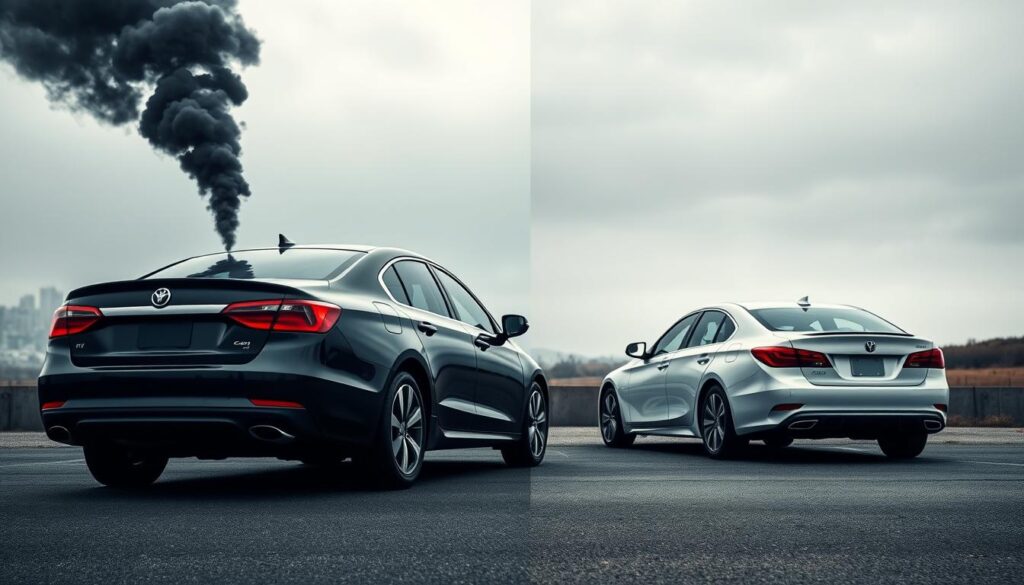
Understanding the carbon footprint of used cars is key to making eco-friendly choices in the car market. The environmental impact of vehicles is a big concern. Choosing used cars can help reduce this issue.
We look at the carbon footprint of used cars by comparing it to new ones. We also explore the long-term benefits of driving used cars.
Comparison of Emissions: New vs. Used
New cars produce a lot of emissions during production. Used cars, on the other hand, have already had their production emissions. Choosing a used car means avoiding the initial carbon footprint of a new vehicle.
Studies show most emissions come from production and use, not driving. Here’s how new and used cars compare:
- New cars: High emissions at first, then ongoing based on fuel and driving.
- Used cars: Lower emissions overall, with production emissions already counted, and slightly less fuel-efficient but effective.
Long-term Benefits of Driving Used Vehicles
Driving used vehicles has many environmental benefits. For example, it reduces the need for new cars, lowering production emissions.
The long-term benefits of used cars include:
- Lower emissions over a longer vehicle life.
- Less environmental impact from avoiding new car production emissions.
- Potential for using more fuel-efficient vehicles that are in good shape.
Choosing a used car can help the environment and save money.
The Role of Sustainability in Auto Purchases
More people are thinking about the planet when they buy cars. This has led to a big change in the car market. Now, we see more focus on cars that are good for the environment.
Sustainability in auto purchases is now a key factor for many. Used cars are a greener choice than new ones. They use less raw materials and produce fewer emissions.
Eco-friendly Alternatives in the Used Car Market
The used car market is adapting to meet the demand for green options. It’s doing this in several ways:
- More fuel-efficient cars are available
- There’s a push for electric and hybrid cars
- Reusing and recycling car parts is encouraged
Choosing a used car can greatly lower your environmental impact. For example, picking a used car means you’re not contributing to the environmental costs of making a new one.
The Impact of Your Purchase Choices
What we choose to buy has a big effect on the planet. By picking a used car, we help the environment. We also cut down on the need for new cars that use a lot of resources.
When looking to buy eco-friendly, consider these:
- Check the environmental record of the car models
- Think about how fuel-efficient the car is
- Look at the car maker’s green practices
By keeping these in mind, we can make choices that help the planet.
In short, making sustainable choices when buying cars is very important. Used cars are a good way to go green. By understanding how our choices affect the environment, we can help make the car market better for our planet.
Resource Conservation When Buying Used
Choosing a used car helps reduce the environmental impact of car making. It makes the car industry more sustainable.
Buying a used car means less need for raw materials. These materials harm the environment, like deforestation and water pollution.
Less Demand for Raw Materials
New cars need lots of materials like steel and aluminum. Used cars use less, saving resources and reducing environmental harm.
Some of the key materials saved by buying used include:
- Steel and aluminum used in car bodies and engines
- Copper used in wiring and electrical systems
- Rare earth metals used in various automotive components
Saving on Energy from Production
Making new cars uses a lot of energy. Choosing a used car means less energy use and fewer emissions.
- Reduced energy consumption during manufacturing
- Lower emissions from production processes
- Conservation of resources for future generations
The Importance of Vehicle Maintenance for Eco-Friendliness
Regular vehicle maintenance is key to reducing emissions. Keeping your used car in top shape means it runs better and is kinder to the environment. We stress how vital maintenance is for eco-friendly driving.
Ensuring Optimal Performance for Lower Emissions
Regular upkeep is essential for your car’s best performance and lower emissions. Simple tasks like oil changes, filter swaps, and tire checks make a big difference. Good maintenance means your car emits less harmful stuff.
- Regular oil changes to keep the engine lubricated
- Replacing air filters to improve fuel efficiency
- Checking tire pressure to reduce rolling resistance
Tips for Eco-friendly Driving Habits
Driving in an eco-friendly way can also cut down emissions. Here are some tips to drive greener:
- Drive at moderate speeds to reduce fuel consumption
- Avoid idling for extended periods
- Use cruise control on highways to maintain a constant speed
By mixing regular maintenance with eco-friendly driving, you can greatly reduce your car’s impact. We urge car owners to adopt these practices for a greener drive.
Buying a Certified Pre-Owned Vehicle
Certified pre-owned vehicles are a mix of reliability and eco-friendliness. Many car buyers are now looking for this. These cars are used but have been checked and certified by the maker or dealer. This means they meet certain quality standards.
What Does Certified Pre-Owned Mean?
A certified pre-owned vehicle is a used car that’s been checked and certified. The maker or dealer inspects it, looks at its history, and fixes any issues. They usually come with warranties, giving buyers extra confidence.
- Rigorous inspection process
- Vehicle history check
- Warranty coverage
- Additional perks like roadside assistance
Environmental Benefits of Buying Certified
Choosing a certified pre-owned vehicle helps the environment. It reduces the need for new cars, which cuts down on pollution and resource use. These cars are often newer and more fuel-efficient than older ones.
Also, the strict inspection and certification process means these cars are well-kept. This lowers the chance of them ending up in landfills. It makes the car industry more sustainable.
The Potential for Upcycling and Repairing
Upcycling and repairing older cars is a green way to cut down on waste. It helps us use cars for longer, which means we don’t need to make as many new ones. This reduces the harm caused by making and using cars.
Keeping older cars on the road longer is a simple way to reduce waste. When we fix and maintain cars well, they last longer. This means we don’t need to make as many new cars. It saves resources and cuts down on waste from old cars.
Keeping Older Cars on the Road Longer
Upcycling and repairing cars helps them stay in use for more years. This is done by:
- Regular maintenance to prevent major repairs
- Upcycling parts to give them a new life
- Repairing damaged components instead of replacing them
By doing these things, car owners can make their vehicles last longer. This reduces the harm caused by making new cars.
Community Impact of Car Repair Initiatives
Car repair efforts help local communities a lot. They create jobs for mechanics and shop owners. They also bring car owners together to share tips and resources.
Also, community-based car repair initiatives teach people how to fix their cars. This helps car owners and makes the community more eco-friendly.
Supporting local car repair shops and programs promotes sustainability. It helps reduce the environmental harm caused by the car industry.
How Local Economies Benefit from Used Car Sales
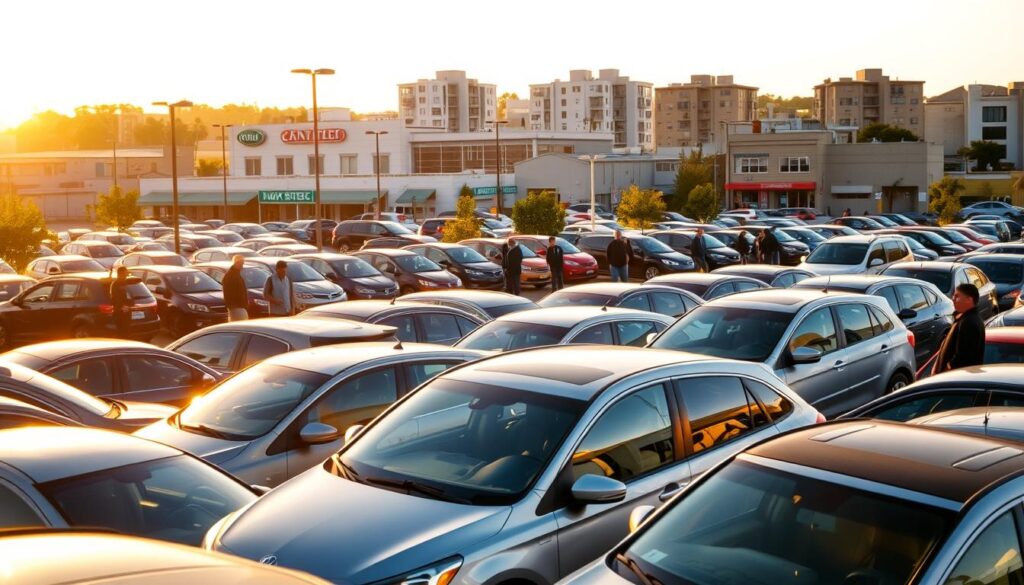
Buying and selling used cars helps local communities a lot. When we buy a used car, we help local businesses like dealerships and repair shops.
Supporting local businesses is key for our communities’ health. Used car sales boost the local economy. They keep money in the community and create jobs.
Supporting Local Dealerships and Mechanics
Local dealerships and mechanics are vital to the used car market. Buying a used car from a local dealer helps our community’s economy. These businesses offer jobs and important services to car owners.
- Local dealerships have a wide selection of used cars, giving buyers more choices.
- Mechanics provide repair and maintenance, helping cars last longer.
- Both help the local tax base, funding community projects and services.
Environmental Impact of Local Transactions
Buying used cars locally is good for the environment. It cuts down on carbon emissions from long-distance car transport. Plus, it promotes sustainability by reusing and recycling vehicles.
Supporting local economies through used car sales also helps the environment. The local used car market uses resources wisely and reduces waste. This aligns with our goal to protect the environment.
Making Conscious Choices in the Used Car Market
When you buy a used car, it’s important to make choices that are good for the planet. We guide you through this by helping you find eco-friendly brands and models. We also explain why vehicle history reports are key.
Eco-friendly Brands and Models
Looking into eco-friendly brands means finding companies that care about the environment. Brands like Toyota and Honda are leaders in this area. They make cars that are better for the planet.
When picking a used car, look for ones that use less fuel and emit fewer emissions. This helps reduce harm to the environment.
Understanding Vehicle History
A vehicle history report tells you a lot about a car’s past. It shows accidents, previous owners, and service records. This info is vital for making a smart buy.
It helps you avoid cars with hidden issues. These issues can lead to expensive repairs or harm the environment.
By doing your homework and choosing eco-friendly options, you can make a purchase that’s good for the planet. We urge you to make choices that support sustainability in the used car market.